
:::
News
World’s First Artificially Cultivated Broodstock of Narrow-Barred Spanish Mackerel Developed by the Fisheries Research Institute Successfully
- PostDate:2025-05-26
Following the successful acquisition of fertilized eggs of narrow-barred Spanish mackerel in May 2023 and the rearing of fry to 50 days post-hatching, the Fisheries Research Institute has further advanced land-based aquaculture techniques for this species. The fish reared have now surpassed 600 days of age, weigh more than 6 kg, and display mature ovaries and testes. These outcomes suggest that a fully artificial culture of narrow-barred Spanish mackerel is becoming technically feasible.
Scomberomorus commerson, commonly known as “narrow-barred Spanish mackerel,” is highly valued by consumers due to its delicious flesh. During the Lunar New Year period, the selling price per fish exceeds NT$10,000. This high market demand has contributed to overfishing, a trend intensified by the effects of climate change, resulting in a decline in stock abundance from 6,600 metric tons in 2002 to 522 metric tons in 2023. In response, the Fisheries Research Institute has, for several years, undertaken research on artificial breeding and aquaculture of narrow-barred Spanish mackerel to develop alternative production sources beyond harvesting.
After achieving artificial hatching of narrow-barred Spanish mackerel fry in May 2023, the Fisheries Research Institute established a world record by maintaining fry survival in culture ponds for approximately 50 days. However, during subsequent rearing stages, swimming activity led to frequent aggressive interactions, collisions with pond walls, and mortality caused by fish jumping out of the ponds. Through repeated experimental trials, researchers substantially reduced these losses by implementing improvements in rearing environments and feeding strategies, allowing the fry to gradually adapt to land-based culture conditions and sustain stable growth.
According to the Fisheries Research Institute, the Spanish mackerel currently under cultivation has survived in artificial environments for more than 600 days (approximately 1 year and 7 months), reaching body weights of 6–7 kg and body lengths of 70–80 cm, indicating rapid growth. Histological examinations have revealed testicular and ovarian development in some of the sampled fish, demonstrating the feasibility of broodstock cultivation in land-based ponds and its potential contribution to artificial aquaculture development. Researchers will continue raising this batch of adult fish with the goal of establishing the world’s first artificially cultivated Spanish mackerel broodstock, thereby advancing toward full-cycle aquaculture. These findings have been published in the international journal Aquaculture International, highlighting Taiwan’s progress in Spanish mackerel aquaculture technology.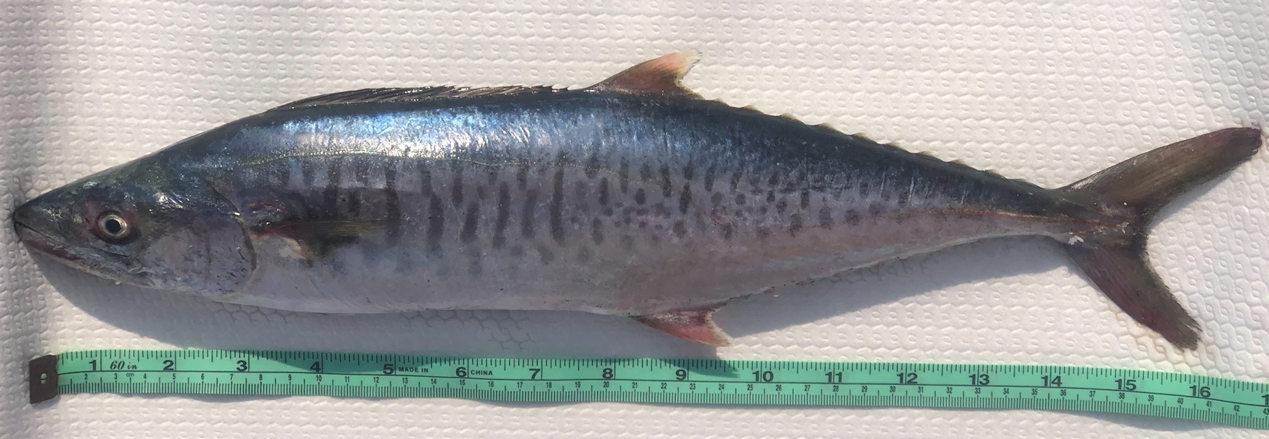
Photo 1. The first adult Spanish mackerel successfully reared under artificial culture conditions
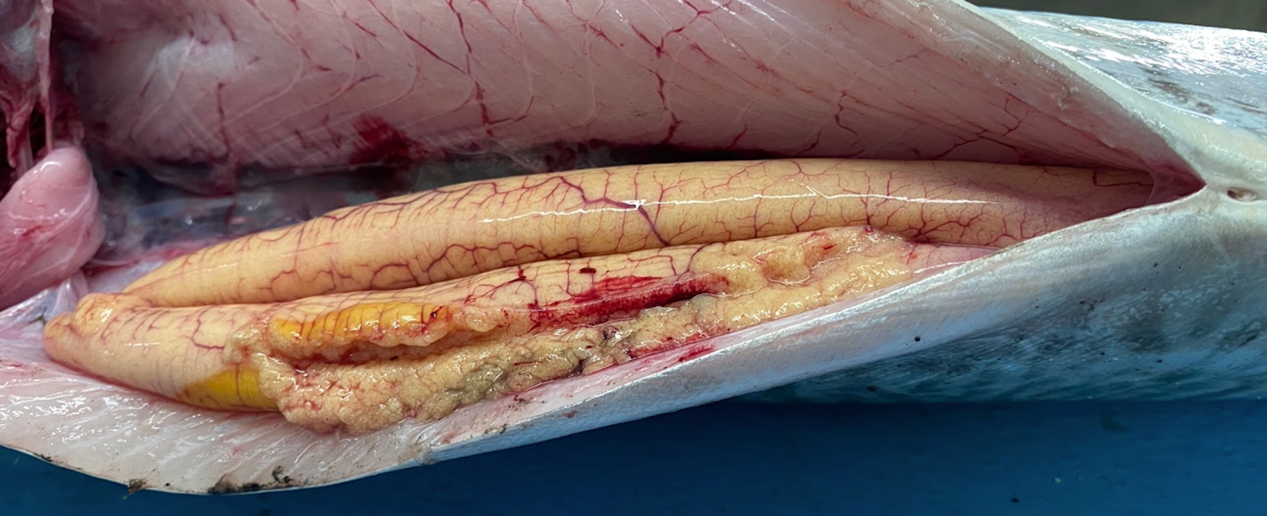
Photo 2. Female Japanese Spanish mackerel cultured in land-based aquaculture ponds reached sexual maturity after approximately 300 days of rearing (body length: 62 cm; body weight: 2,200 g).
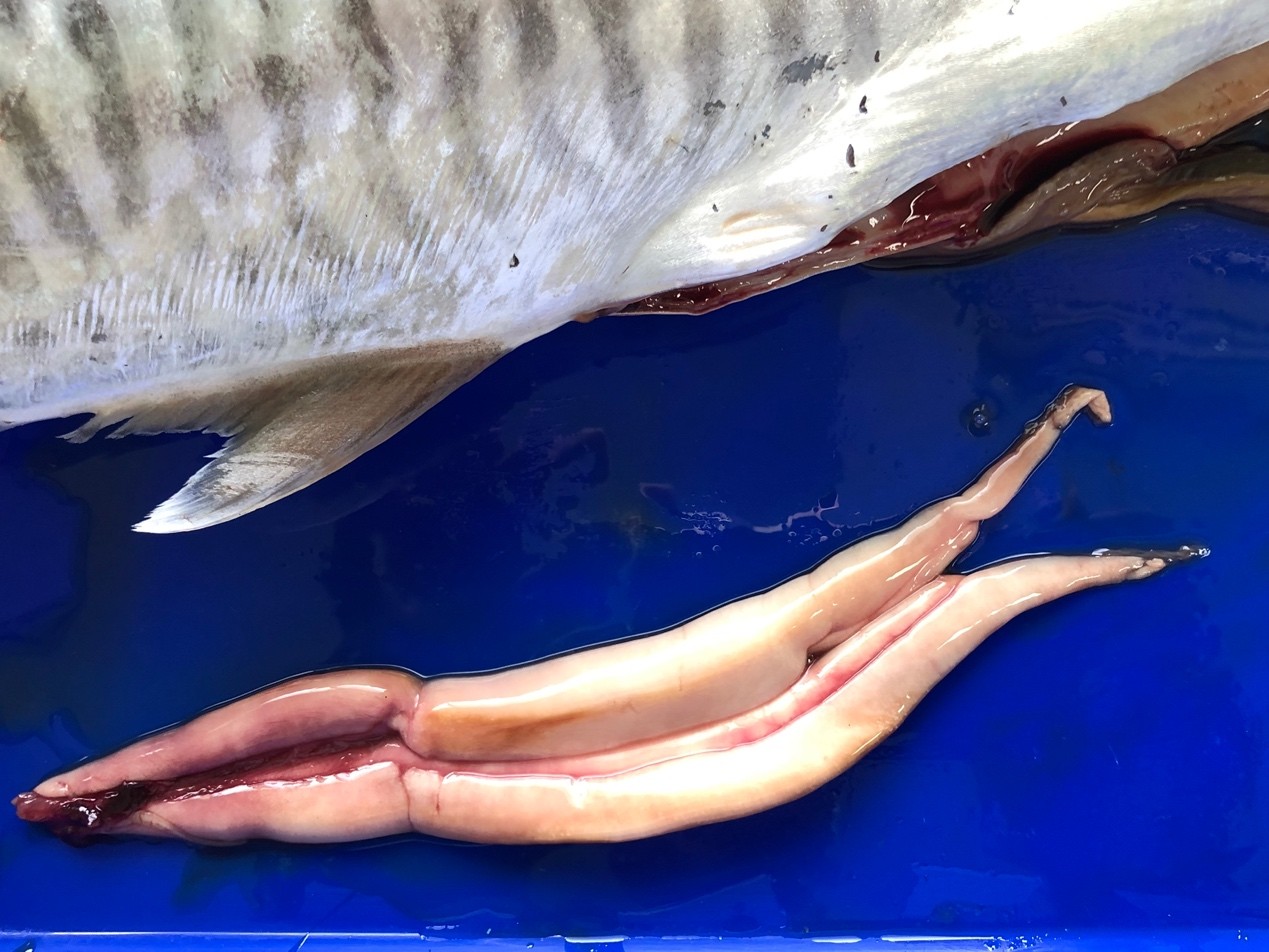
Photo 3. Male narrow-barred Spanish mackerel cultured in land-based aquaculture ponds reached sexual maturity after approximately 112 days of rearing (body length: 49 cm; body weight: 800 g)
Scomberomorus commerson, commonly known as “narrow-barred Spanish mackerel,” is highly valued by consumers due to its delicious flesh. During the Lunar New Year period, the selling price per fish exceeds NT$10,000. This high market demand has contributed to overfishing, a trend intensified by the effects of climate change, resulting in a decline in stock abundance from 6,600 metric tons in 2002 to 522 metric tons in 2023. In response, the Fisheries Research Institute has, for several years, undertaken research on artificial breeding and aquaculture of narrow-barred Spanish mackerel to develop alternative production sources beyond harvesting.
After achieving artificial hatching of narrow-barred Spanish mackerel fry in May 2023, the Fisheries Research Institute established a world record by maintaining fry survival in culture ponds for approximately 50 days. However, during subsequent rearing stages, swimming activity led to frequent aggressive interactions, collisions with pond walls, and mortality caused by fish jumping out of the ponds. Through repeated experimental trials, researchers substantially reduced these losses by implementing improvements in rearing environments and feeding strategies, allowing the fry to gradually adapt to land-based culture conditions and sustain stable growth.
According to the Fisheries Research Institute, the Spanish mackerel currently under cultivation has survived in artificial environments for more than 600 days (approximately 1 year and 7 months), reaching body weights of 6–7 kg and body lengths of 70–80 cm, indicating rapid growth. Histological examinations have revealed testicular and ovarian development in some of the sampled fish, demonstrating the feasibility of broodstock cultivation in land-based ponds and its potential contribution to artificial aquaculture development. Researchers will continue raising this batch of adult fish with the goal of establishing the world’s first artificially cultivated Spanish mackerel broodstock, thereby advancing toward full-cycle aquaculture. These findings have been published in the international journal Aquaculture International, highlighting Taiwan’s progress in Spanish mackerel aquaculture technology.
Photo 1. The first adult Spanish mackerel successfully reared under artificial culture conditions
Photo 2. Female Japanese Spanish mackerel cultured in land-based aquaculture ponds reached sexual maturity after approximately 300 days of rearing (body length: 62 cm; body weight: 2,200 g).
Photo 3. Male narrow-barred Spanish mackerel cultured in land-based aquaculture ponds reached sexual maturity after approximately 112 days of rearing (body length: 49 cm; body weight: 800 g)
Inaugural Cross-sector Collaboration Engaging Students in Fisheries Technology Development: A Joint Initiative of the Fisheries Research Institute, National Taiwan Ocean University, and the Keelung ..
Fisheries Research Institute and Keelung City Government Renew Collaboration: Integrity Volunteers Engage Children through Storytelling at the Childcare Center